
Submitted by admin on April 6th, 2026
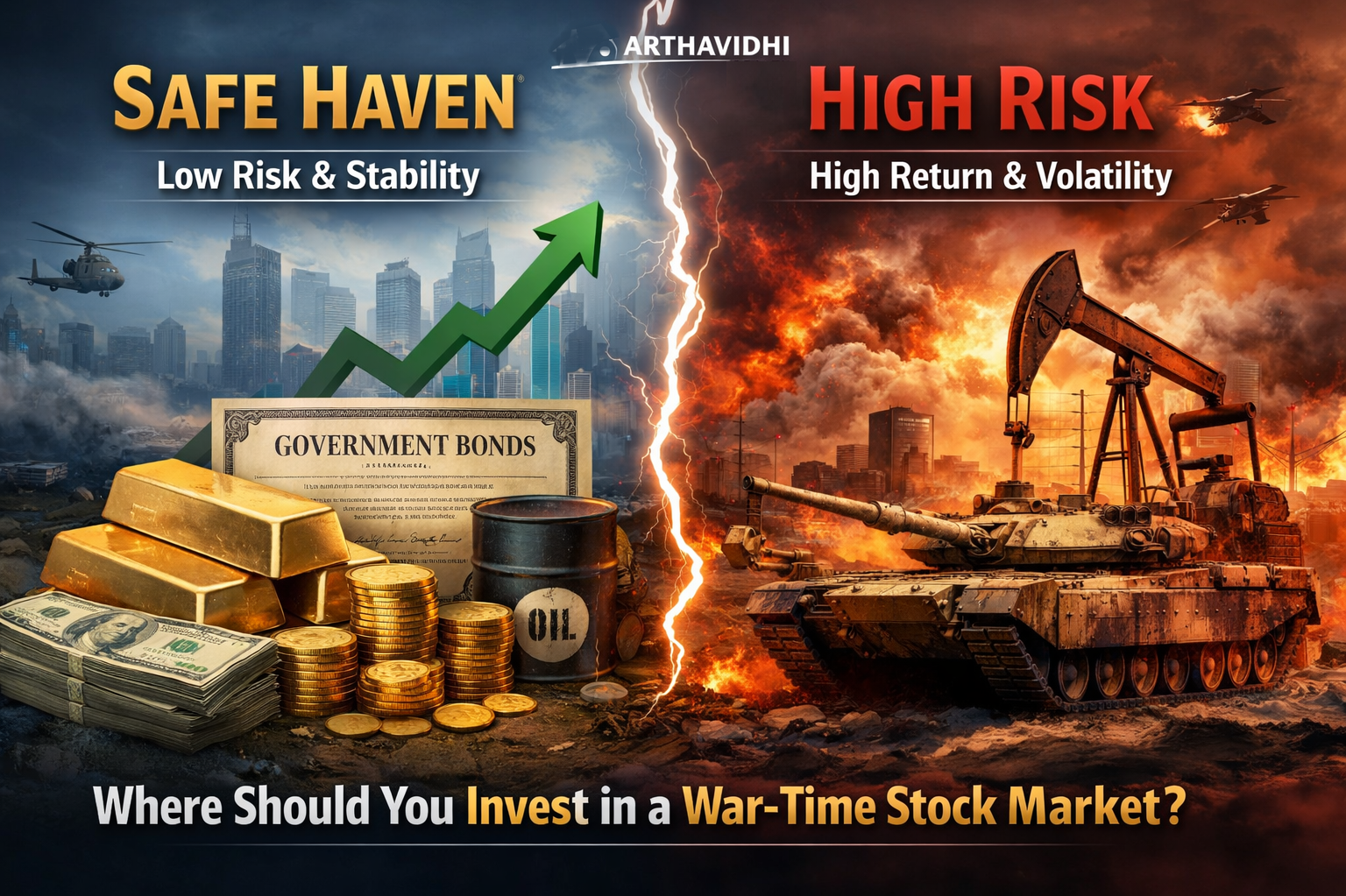
War-time financial markets are fueled by fear, uncertainty and rapid capital changes. Investors usually position themselves along a continuum of low-risk and stable investments (e.g. cash/gold, etc.) to high-risk/varying return investments (e.g. energy sector, etc.) depending on the current state of geopolitical events.
Safe-haven investments hold value during periods of market downturns (or other types of major events causing market distress) and cause investors to move their capital into these type of assets because they are considered safe and secure.
Examples of Safe Havens:
While safe havens provide stability for an investor’s capital; they do provide little to no overall return characteristics.
Many of the above-mentioned safe havens have shown to be very volatile. For example, gold has experienced significant drops in recent conflicts due to liquidity drains/pressure and rising interest rates.
High-risk investments typically are very volatile with very high return potential if an investor is able time their buying and selling trades properly.
Examples of High-Risk Investments:
High-Risk Compared to Safe-Haven Investments During War:
For example: have Energy and Oil Sector stocks during past wars rose significantly due to increased oil prices.
| Factor | Safe Haven | High-Risk |
| Goal | Protect capital | Grow wealth |
| Volatility | Low to moderate | High |
| Returns | Stable, lower | Potentially high |
| Examples | Gold, bonds | Defence, energy stocks |
| Best for | Conservative investors | Aggressive investors |
There is no one-size-fits-all answer. The right approach depends on your risk tolerance and time horizon.
Balanced Strategy (Recommended):
This allows you to:
The reason why it is so important to have a diversified portfolio is that certain assets will likely do well and certain assets will likely not do well in times of crisis. For example, oil may be the best-performing asset during a supply shock, but gold will likely be the best performing asset during a time of financial instability.
Investing during wartime is less about finding the best place to invest and more about managing risk in an intelligent manner. By using safe-haven and high-risk investments, the investor is able to take advantage of the current environment (war) while avoiding making panic decisions. Investors who have a diversified portfolio and are able to make informed decisions are probably going to be in a better position to maintain and build their wealth during geopolitical turmoil.
Int Rates : 10.5% - 22%
Loan Amount: ₹ 1,00,000.00
Maximum Tenure - 7 Years
Lowest EMI : ₹ 1,686
Interest Rate 13.99% - 24.99%
Loan Amount: ₹ 1,00,000.00
Maximum Tenure – 5 Years
Lowest EMI : ₹ 2,326
Interest Rate 9% - 13%
Loan Amount: ₹ 1,00,000.00
Maximum Tenure – 20 Years
Lowest EMI : ₹ 1,014
Interest Rate 8.40% - 12%
Loan Amount : ₹ 1,00,000.00
Maximum Tenure – 35 Years
Lowest EMI – ₹ 739