
Submitted by admin on March 12th, 2026
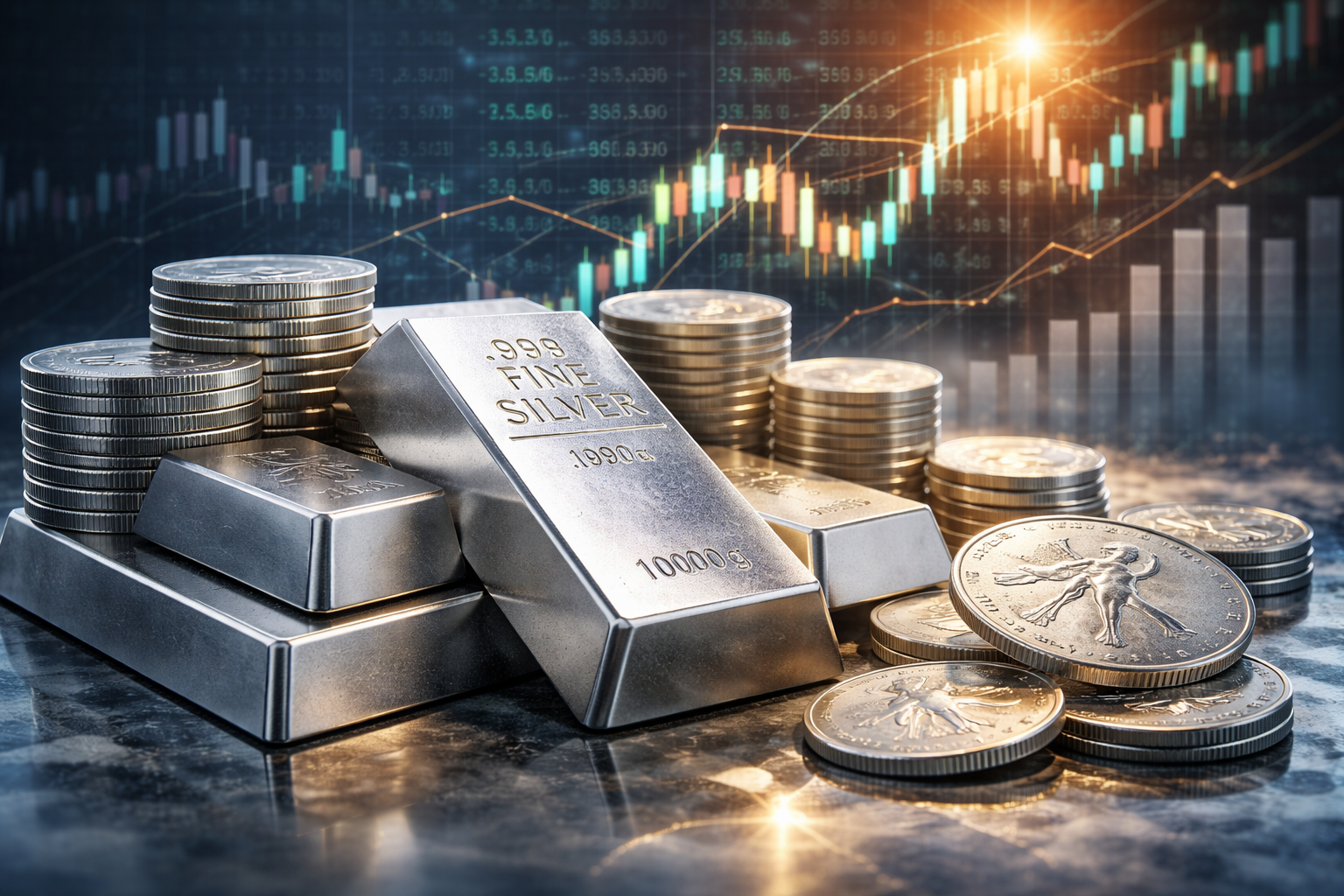
Silver has been thought of as a valuable asset which was used as a precious metal and as an industrial commodity. In recent years, investors have been considering the use of silver as a means of diversification of their portfolios, to hedge against inflation and as an investment to follow the increase in industrial demand. Nevertheless, determination of investment in silver depends on your financial objectives, risk tolerance and investment strategy.
Inflation and economic uncertainty are considered to be one of the primary reasons why investors purchase silver. Silver as well as gold is considered a safe-haven asset. In cases where the world market turns unstable or the currency loses its strength, investors resort to precious metals as a way of maintaining value. Silver prices have been observed to increase when there is an economic stress, geopolitical pressure or an increased inflation.
Silver has a great industrial demand which is another reason that it should be invested in. Silver finds extensive applications in electronics, solar panels, medical equipment and electric vehicles. With the movement of the world to renewable energy and digital technology, silver still has demand in the manufacturing process and in clean energy initiatives. This industrial purpose gives silver two functions; it is an investment product, as well as a very important industrial metal.
Silver has a number of benefits to investors.
To begin with, it is usually cheaper than gold. Since silver price is significantly lower than gold, it gives the chance to the small investors to enter the precious metals market with relatively small capital.
Second, percent price variations of silver tend to be more intense as compared to gold. The silver market tends to perform better than the gold market especially when precious metal markets have gone up because the silver market is relatively small and the increasing demand by the industry.
Third, silver gives portfolio diversification. It is a common practice among financial advisors to diversify a client investment by investing in varying classes of assets (stocks, bonds and commodities) in order to minimize the total risk. Silver is a good idea to add to a portfolio, particularly in times of stock market slumps.
Silver has some risks even though it has benefits.
Price volatility is one of the major concerns. The price of silver may be more volatile than gold since it is not just the emotions of the investors but also the industrial demand that affects the price. Silver prices can go down due to economic slowdowns that minimize the manufacturing activity.
The other issue is that silver is not a generating commodity. Silver can only retain value depending on market price unlike stocks where people receive dividends or bonds where investors receive interests. Investors depend solely on price growth in terms of returns.
There is also storage and security of physical silver. When purchasing silver bars or coins, you have to be sure that they are stored safely, which may incur extra expenses (bank lockers, insurance).
There are a number of ways through which investors invest in silver.
The most conventional way is physical silver. Silver coins, bars or bullion may be purchased through approved dealers. A lot of investors are fond of physical silver since it is a hardware.
Another popular option is that of silver exchange-traded funds (ETFs). These funds are indexed on the price of silver and enable the investor to trade silver effectively as a stock in the stock market. ETFs do not require any physical storage.
The other indirect method of investing in silver is through silver mining stocks. Silver mining companies can enjoy the benefits of an increase in silver prices. Nevertheless, they are also subject to the performance of the company and operational issues.
Silver has a future depending on various global forces such as inflation rates, interest rates, the industrial demand and the geopolitical situation. As more people need solar panels, electric cars, and better electronics, a number of analysts feel that silver would be able to enjoy the long-term industrial trends.
Meanwhile, precious metals usually work in turbulent financial markets. Investors who are worried about inflation or unrest in the world economy usually set aside part of their funds in silver.
Silver is potentially an effective asset on which to diversify to shield against the economic uncertainty. It is unique among the commodities because of its industrial urgency and precious metal status. It is also associated with price volatility and is not a source of a sustained income.
To the vast majority of investors, financial analysts recommend that precious metals such as silver only take a minor part of a portfolio- usually about 5-10 percent. Though, silver may or may not be part of your long-term financial plan, careful research and a balanced investment strategy can be used to find this out.
Int Rates : 10.5% - 22%
Loan Amount: ₹ 1,00,000.00
Maximum Tenure - 7 Years
Lowest EMI : ₹ 1,686
Interest Rate 13.99% - 24.99%
Loan Amount: ₹ 1,00,000.00
Maximum Tenure – 5 Years
Lowest EMI : ₹ 2,326
Interest Rate 9% - 13%
Loan Amount: ₹ 1,00,000.00
Maximum Tenure – 20 Years
Lowest EMI : ₹ 1,014
Interest Rate 8.40% - 12%
Loan Amount : ₹ 1,00,000.00
Maximum Tenure – 35 Years
Lowest EMI – ₹ 739